
Fruity Worcestershire Sauce
- Pickles, Chutney, Relish & Sauces
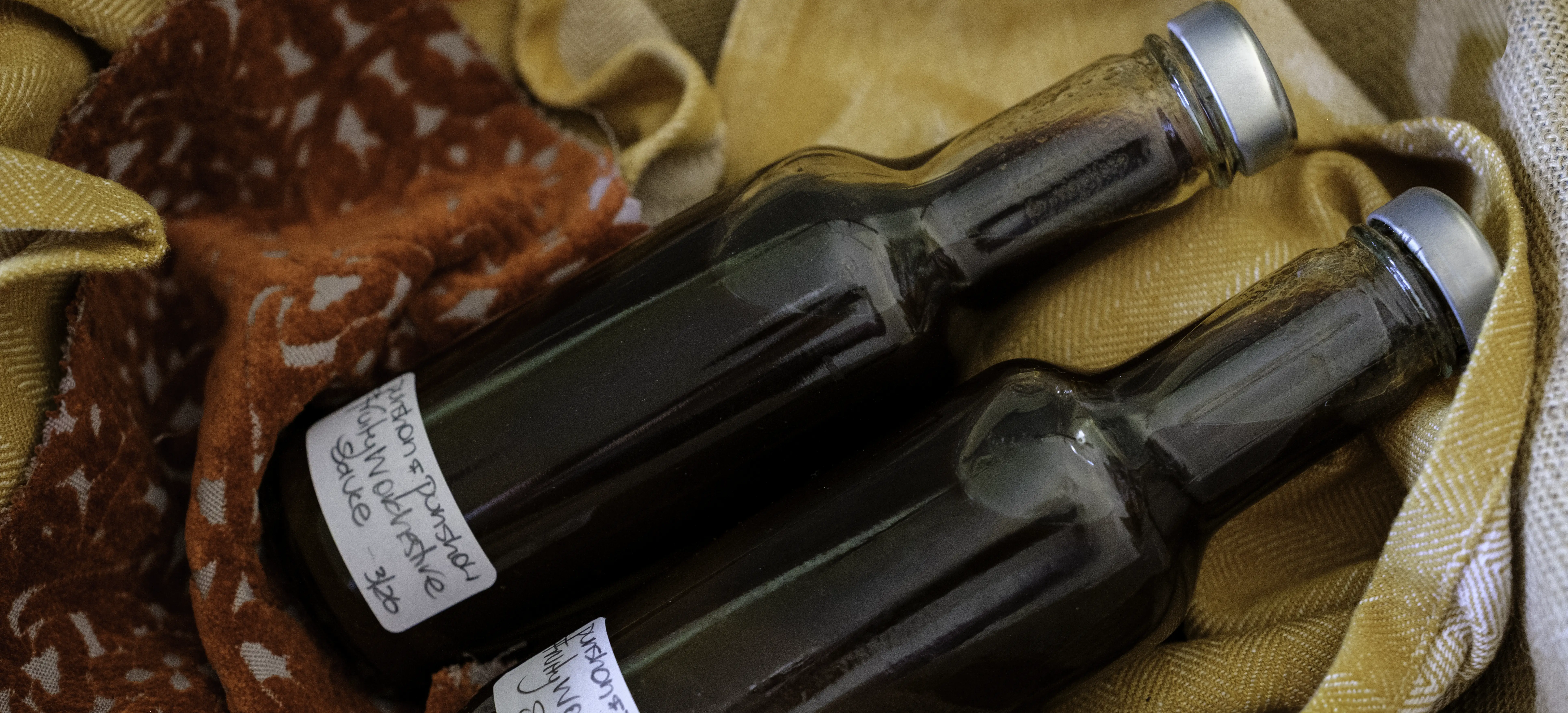
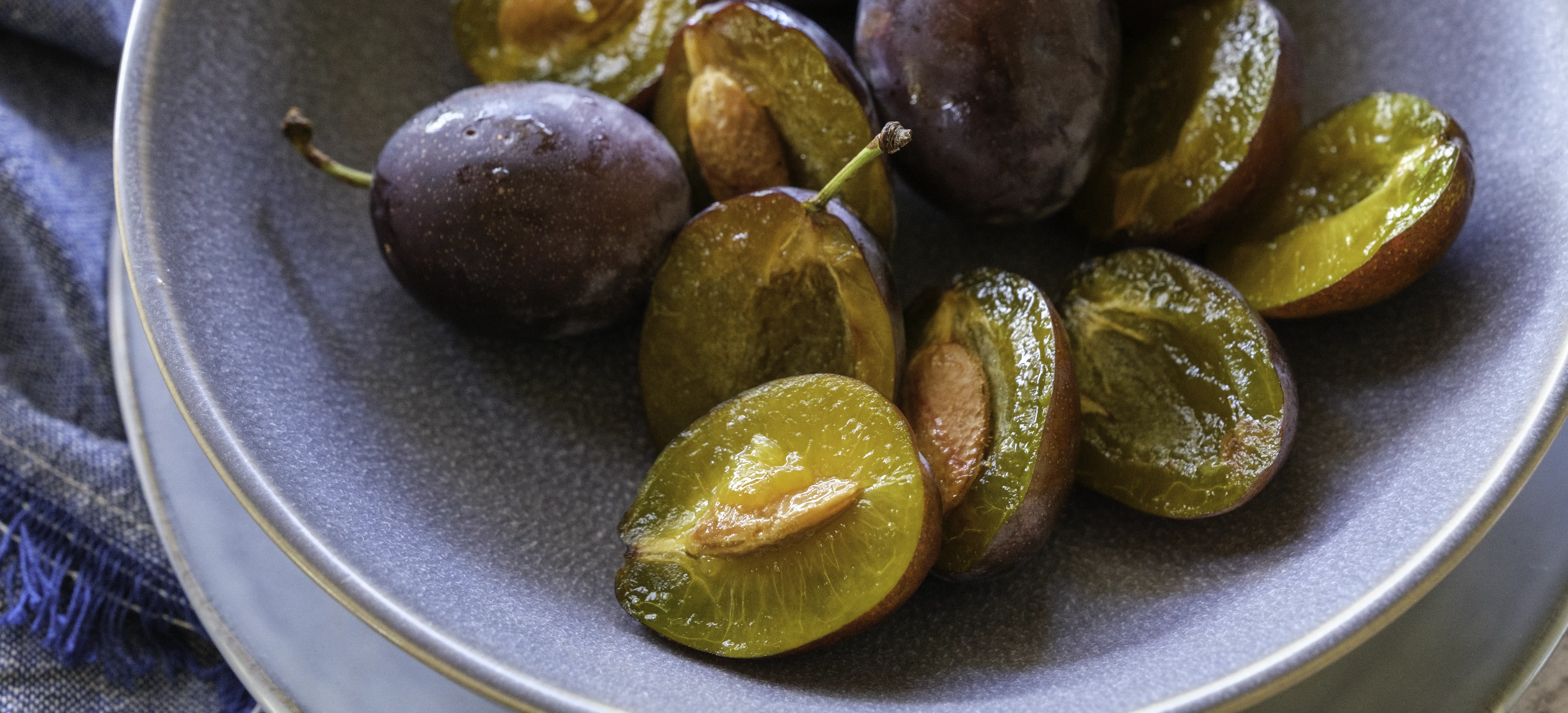
This fruity plum Worcestershire Sauce has all the makings to be a winner for the Worcestershire Sauce lovers among your family or friends. It’s dark, spicy, fruity and leaves you wanting for more. Fresh plums add a fruit flavour and richness, making it a standout amongst its rivals.
Lea & Perrins invented this funky savoury condiment in Worcester, England, in the 1830s. It still lives on in many traditional recipes where its piquancy is used to heighten the flavour of the dish. Oyster Kilpatrick, traditional English Steak & Kidney Pie, Welsh Rarebit and a good and spicy Bloody Mary, just to name a few. The longer it matures - the better it gets.
To get its pronunciation right its ‘woos-ter-sheer.’ And if you don’t have any fresh plums, try my Worcestershire Sauce that uses plum jam instead.
- Preparation Time:
- 30 minutes
- Cooking Time:
- 3 hours
- Quantity:
- 7 x 300ml sauce bottles
PREPARATION
Sterilise screw cap sealable glass bottles and lids with a protective lining. Have the bottles and lids dry, hot and ready for the bottling stage. Here’s my quick reference guide to sterilising containers.
INGREDIENTS
- 1 kg
- Dark plums, ripe, firm
- 3.3 litres
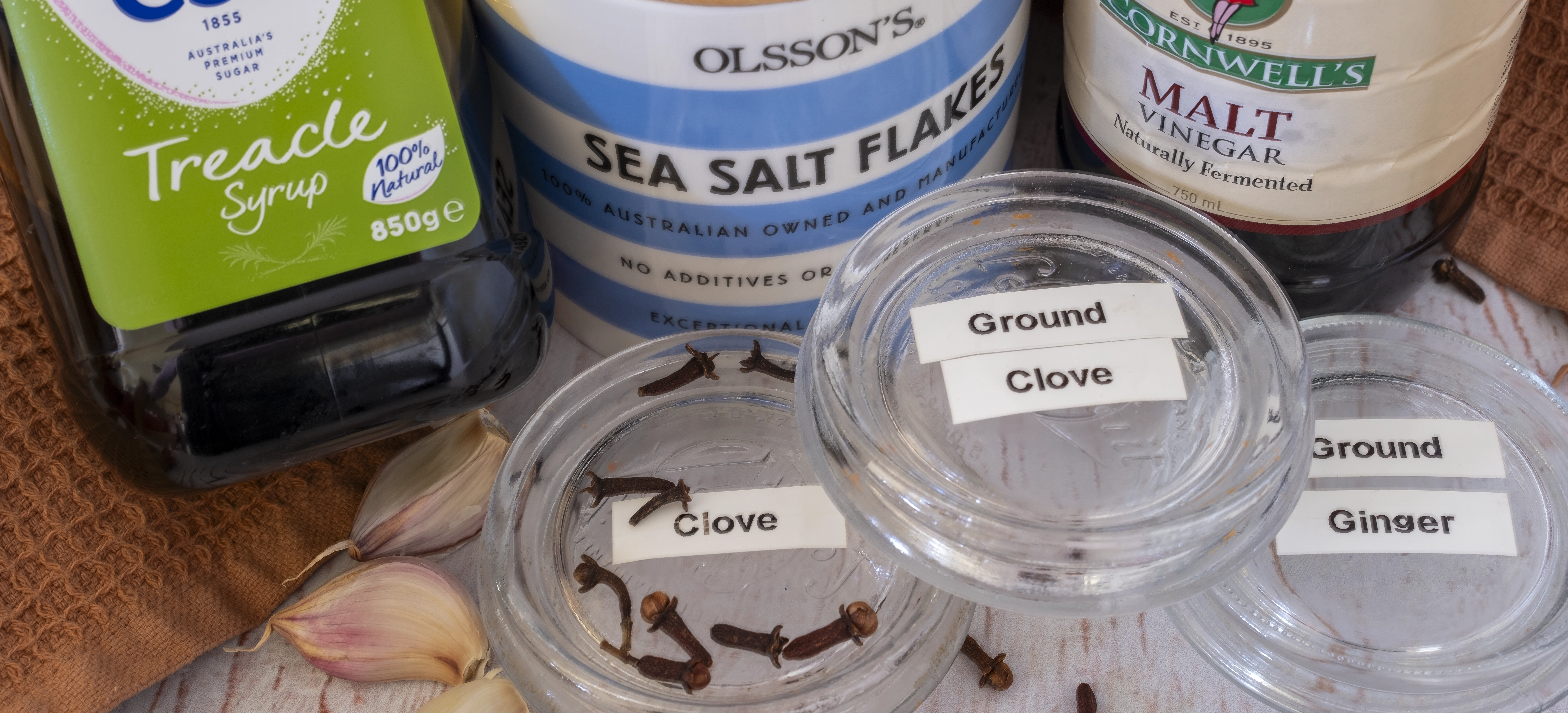
- Malt Vinegar
- 660g
- Treacle
- 82g
- Cooking salt
- 85g
- Garlic, fresh, peeled, finely chopped
- 85g
- Ginger, fresh, peeled, finely chopped
- 8g
- Allspice berries
- 1 1/2 teaspoons
- Ground cloves
- 1/4 teaspoon
- Chilli flakes
- 500g
- Brown sugar
METHOD
Prepare the plums. Wash, dry gently with a tea towel or kitchen absorbent paper and de-stem. Cut the plums in half, by running a small sharp vegetable knife around the plum in the fruit’s natural groove. Remove the pip, roughly chop the plums and place in a stainless-steel preserving or heavy bottomed stainless-steel pan. Discard the pips.
Place the allspice berries in a spice bag, or tea infuser. Refer to the Notes Section below: How to Make a Spice Bag & How to Use a Tea Infuser.
Place the remaining ingredients except the sugar in the pan with the plums and spices. Return to the heat, bring to the boil quickly and then turn the heat down and simmer, with the lid on, for 3 hours, or until the plums have completely broken down and the sauce has thickened slightly. Stir occasionally.
Strain through fine muslin, or equivalent material, overnight. This can be made by placing the muslin in a strainer and then the strainer over a deep bowl or saucepan. The following morning, gently squeeze the muslin to extract the last of the sauce from the plum mash. Discard the strained pulp.
Place back on the heat, bring to the boil, then gently simmer to skim any fruit scum that moves to the side of the preserving pan. Remove from the stove and place on a heat resistance surface.
Have the hot dry bottles and caps sterilised ready for the bottling stage.
Place hot sterilised sauce bottles on a wooden board to prevent the bottles from breaking - which can be caused by the heat differential between the hot bottle and a cold surface.
Use a funnel to pour the hot sauce into hot screw cap sealable bottles, fill to approximately 2.5cm (1 inch) from the top of the bottle and seal immediately with hot dry lids. This HHH method of HOT dry jars, HOT dry lids and HOT preserve creates a vacuum seal as it cools. The “popping” sound, often heard in the kitchen, signals a successfully vacuum sealed jar.
Allow to cool and wipe down the bottles to remove any spills during the bottling stage.
Seal, label, and store in a cool dark place in the kitchen or pantry.
Allow to mature for at least 4 weeks before eating. It will keep unopened for up to at least 2 years in a cool dark pantry or other suitable storage area. Shake the bottles occasionally.
NOTES
- Use Good Quality Containers
- Good quality containers should be used to store preserves, particularly when they are processed in a hot water bath. Thin jars often cannot withstand the temperatures and may crack either in the bath or on and or after removal.
- Avoid the disappointment and invest in some good jars from a homewares or preserves outlet.
- Select containers that have non-reactive lids with a protective lining as vinegar solutions can cause the lids to rust over time.
- To Make a Spice Bag
- Drape a square of muslin or calico over a basin. Place the spices and/or herbs outlined in the recipe mixture into the cloth. Gather up the corners and make a bag by tying it up with kitchen string approximately 2 cm above the mixture.
- Always allow room between the tie point and spice mixture so the water can bubble through the bag easily. This helps to extract as much flavour as possible from the contents.
- Discard the spices, unless otherwise specified in the recipe once the bag has been removed from the preserving pan. Wash, dry, and keep the cloth for the next batch. My tea towel draw has a range of different sized cloths that are on hand for my preserving sessions. Alternatively, when using a smaller quantity of spices, use a large sturdy sealable stainless steel tea infuser, that can be easily cleaned and withstand long slow simmering.
- Malt Vinegar
- Malt vinegar is used for its intense flavour while wine vinegar and cider vinegar are better for preserving the bright natural fruit and vegetable colour and flavours in chutney and sauce.
- The dark malt vinegar and treacle, used in this recipe, are essential in contributing to the distinctive dark colour and flavour of Worcestershire Sauce.
- Preserving Pans
- If you don’t have a preserving pan, use a large heavy bottom pot, preferably stainless steel. This will distribute the heat evenly across the pan and sauce while it’s cooking.
- Use Good Quality Salt
- Many commercial salt brands contain stabilisers and anti-caking agents and often iodide which forms a whitish haze and sediment. These additives and in particular iodine can affect the appearance and taste of pickles and preserves during the maturation and storage period.
- The ingestion of a cocktail of anti-caking chemicals such as calcium silicate, sodium silicoaluminate, tricalcium phosphate, magnesium carbonate, silicon dioxide and yellow prussate of soda, is also unnecessary.
- Read the label before buying and look for salt that is free from any artificial additives. My favourite salt is Olsson Cooking Salt. No commercial benefit is received from Olsson Salt.
- Cooking Times
- Cooking times are an approximation only.
- They are provided as guidelines as cooking times are influenced by the type of pot and its diameter and height, speed of cooking and fruit ripeness, size, and moisture level.
- Simmer gently so the mixture does not evaporate too much during the cooking period. Turn on the extraction fan to help to dispel the vinegar smell from the kitchen.
- Removing the Scum
- During the cooking process of making preserves, a scum can be produced. . Impurities from the fruit and sugar will rise to the surface and a fine frothy foam will move towards the edge of the preserving pan. Some fruits will produce more scum than others.
- This is a natural self-clarification process and makes the task of making a high-quality preserve easier. Removing the scum increases the preserve’s clarity. This is very important if it is being submitted for competition.
- Remove the scum before bottling. Using a stainless-steel spoon, skim the scum from around the edge of the preserving pan. Be careful to remove just the scum and not the preserve itself. This can be done while the preserve is boiling and/or once it has been taken off the heat.
- Do not attempt to remove the scum from the centre of a boiling pan, as there is a high risk it will splutter and hot preserve burns
- Allspice (Pimenta diocia)
- Also known as Jamaican pepper, clove pepper, pimento.
- Allspice comes from an evergreen tree in the myrtle family. The berries are picked in summer when they are mature but still green.
- Berries are sweated in containers to release their active ingredients then dried. Whole berries retain their flavour well and will keep almost indefinitely sealed in a cool dark place.
- They contain a rough surface which contains tiny oil glands and most of the flavour is contained in the wrinkled husk, not the seeds.
- Allspice powder quickly loses potency. Best to buy in small quantities and keep sealed in cool dark place for up to 6 months.
- Suits both sweet and savoury dishes.
- Chilli (Capsicum annuum, Capsicum frutescens and several other species)
- It is important to wash your hands thoroughly after handling and de-seeding chillis or dried chilli products. The oil is easily transferred from the chillies to hands. If you touch your eyes or any delicate areas, the chilli oil will be transferred on contact and create a burning sensation.
- Why is Chilli so hot? The legendary heat comes from a natural compound, capsaicin, which develops and is concentrated in the white pith with some migrating to the seeds. The amount of capsaicin a Chilli contains depends upon the Chilli variety and growing condition. High temperatures and drought can increase capsaicin production as the chilly ripens. To control and reduce the amount of heat, use the most appropriate variety and amount of Chilli, remove as much or less of the white membrane and seeds, and vary the length of contact time with other ingredients. Always use the amount of Chilli that suits your taste.
- Chilli heat or pungency is measured in Scoville Heat Units (SHU) which was developed in 1912. The higher the Scoville rating the hotter the chilly. The ubiquitous Jalapeno varies between 2,500 – 10,000 SHU which is mild compared to the Habanero and Scotch Bonnets; 80,000 – 150,000 SHU or the hottest Chilli in the world, the Carolina Reaper, which has been measured at 2million SHU! Aptly named the Reaper; use with extreme caution. SHU was developed in 1912.
- Dried chili develops an earthy, woody, and nutty flavour complexity that is rare among other herbs and spices.
- To make your own special Chilli powder; blend with dried ground cumin, garlic and oregano or grind finely to make a hot Chilli powder. To make dried Chilli flakes. Remove Chilli seeds from the dried Chilli and place in a bowl. Place the dried Chilli in a blender and grind to small flakes. Combine the flakes and seeds. Store in an airtight container. Substitute dried Chilli flakes or powder in recipes throughout the year.
- Clove (Syzygium aronaticum)
- Cloves are the dried unopened flower buds of a tropical evergreen plant. Borne in a cluster of 10-15, they are picked when full sized, still green but just on the verge of turning pink.
- Aroma is pungent, warm, aromatic, camphor-like and faintly peppery. Flavour is intensely pungent. Used in moderation, cloves bring a pleasing, palate-cleansing freshness, and sweet spicy flavour to food. Its powerful flavour is usually tamed by blending with other similar warming spices to soften its dominance. Use clove sparingly.
- Look for cloves that are plump, not shriveled or broken and where the majority retain their rounded tops. Unless you use a lot of whole or ground cloves, purchase in small quantities to retain its freshness and aromatic vibrancy.
- Ginger (Zingiber officinale)
- Ginger has a hot-spicey citrusy woody taste. It’s available as a fresh underground stem, a rhizome, or as a finely ground powder. The dried version is used in baking and spice blends whereas fresh ginger is used widely in Asian cuisine.
- Do not substitute dried ginger for fresh as the dried form has a stronger and more aromatic flavour.
- When purchasing fresh ginger, avoid older rhizomes with signs of shrivelling as the rhizome is drying out and the flesh can be fibrous.
- Treacle
- Treacle is very dark in colour, almost black. It’s made from molasses and sugar syrup. It has a rich, intense, and slightly bitter flavour and is the by-product of refining sugar.
- It’s widely available in supermarkets in the sugar section.
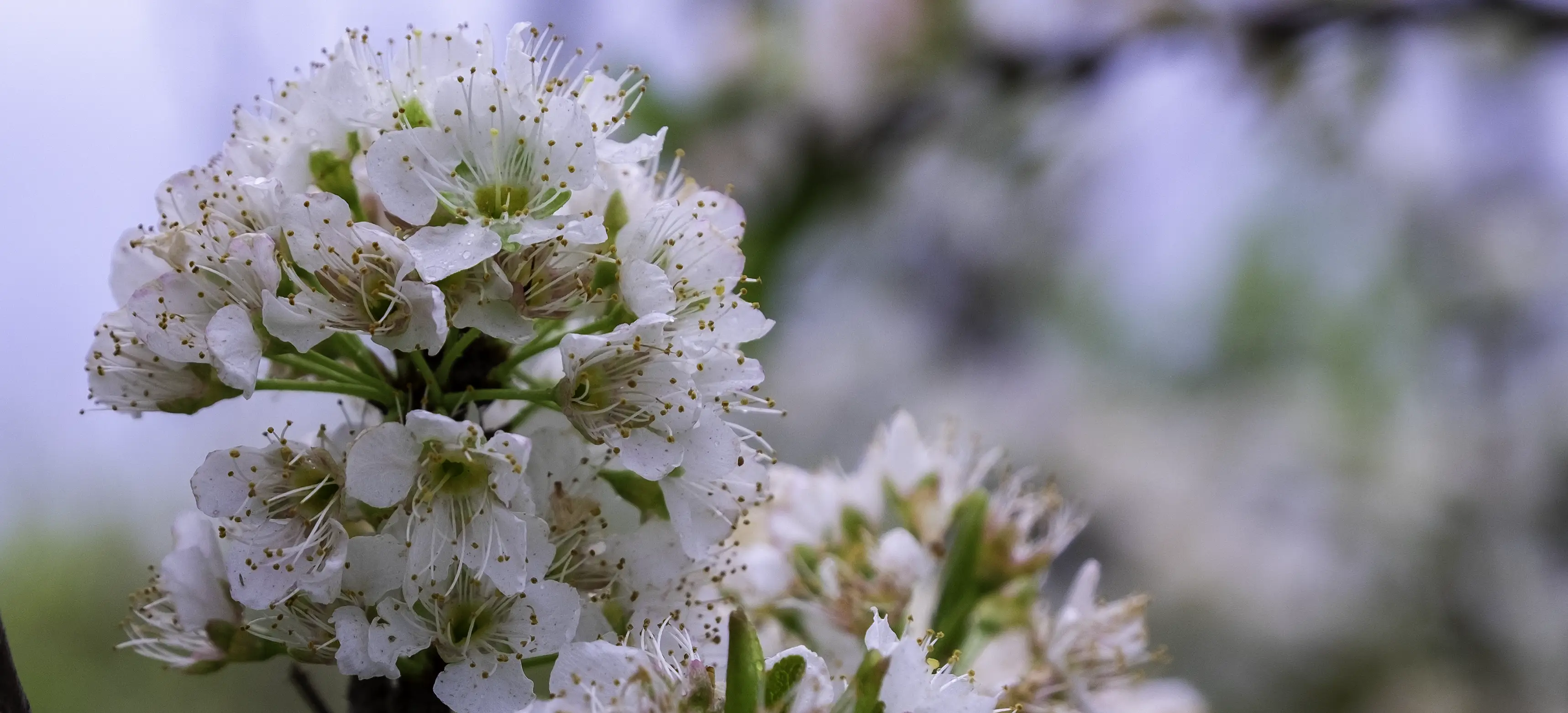 Plum tree flowering in spring for an early harvest